
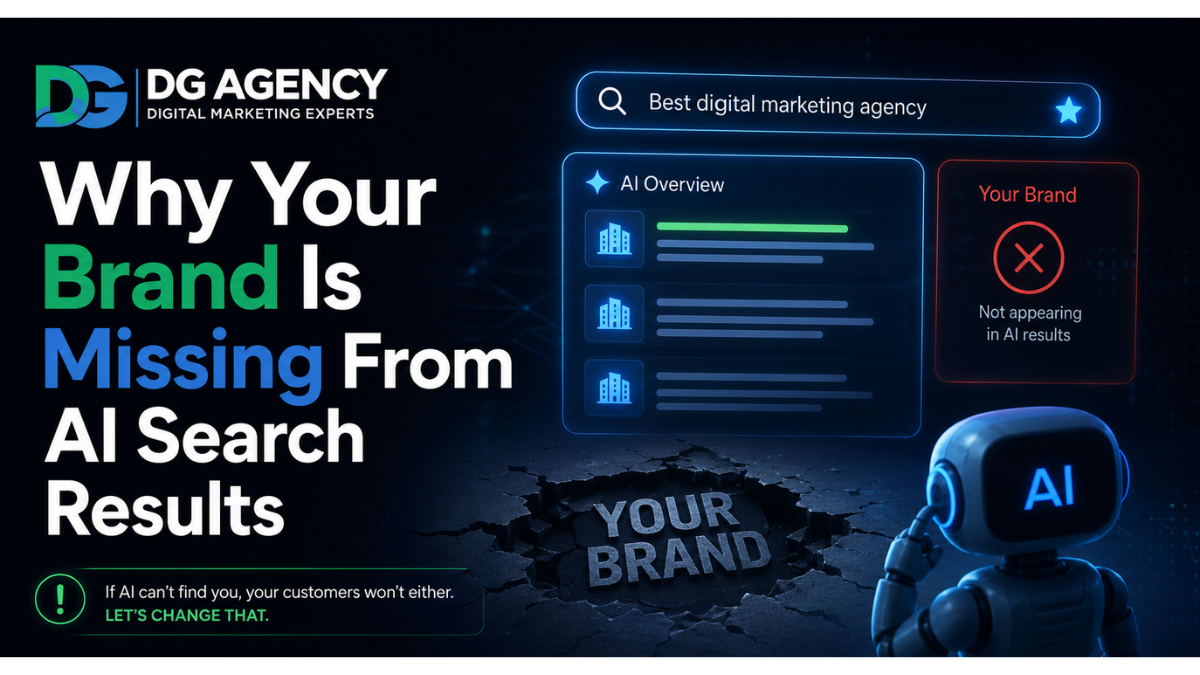
AI Search Ranking Factors: What Actually Influences LLM Answers in 2026
ChatGPT, Gemini, Perplexity and AI Overviews don’t rank pages — they assemble answers. Here’s what the 2026 research actually shows about which signals move the needle, which ones are still theories, and which ones are dead weight.
Traditional SEO had a fairly stable rulebook: crawl, index, rank on a fixed set of signals. AI search doesn’t work that way. A large language model isn’t ranking ten blue links — it’s deciding, in real time, which fragments of which pages are trustworthy enough to be stitched into one paragraph and handed to a user who never has to click through. That single shift is why a page sitting at position #1 on Google can be invisible in ChatGPT, while a page ranking #7 gets quoted word-for-word in an AI Overview.
There’s no public “LLM algorithm” to leak or reverse-engineer. What we have instead, going into the second half of 2026, is a growing pile of citation-pattern studies, brand-visibility audits, and retrieval research that — taken together — paints a reasonably clear picture. This piece organizes that picture the way engineers actually think about evidence: by confidence level, not by hype.
How LLMs Actually Pick Sources
Most modern answer engines run on some version of retrieval-augmented generation (RAG). Instead of only using what the model memorized during training, it fetches live information and grounds its answer in that evidence. In practice this happens in four stages:
① Query Interpretation
The system decides what the user actually wants and whether it even needs to search, or can answer from memorized knowledge.
② Query Fan-Out
One question is silently split into several related sub-searches (a comparison, a definition, a “best of” list) so the model can gather angles, not just one source.
③ Candidate Evaluation
Retrieved pages are scored for relevance, trustworthiness, and how easily a clean, quotable answer can be extracted from them.
④ Synthesis & Grounding
The model writes the answer, leaning on sources that corroborate each other — and preferring claims multiple sources agree on over a single outlier.
The Ranking Factors Table
Below is a consolidated view of the signals most frequently tested across 2026 citation studies, sorted by how strong the supporting evidence actually is — not by how often a factor gets mentioned in marketing content.
Moderate evidence
Emerging / theoretical
Weak / overstated
| Factor | Confidence | What it means in practice |
|---|---|---|
| Corroboration across sources | Strong | Claims repeated consistently across multiple independent, credible sites are trusted far more than a single unverified claim — even from your own site. |
| Answer-first content structure | Strong | A direct answer in the first 1–2 sentences, followed by reasoning and detail, is dramatically easier for a model to extract and quote cleanly. |
| Structured content (headings, Q&A, lists, schema) | Strong | Pages with clear hierarchy and explicit Q&A formatting are over-represented in citations relative to their share of normal organic traffic. |
| Brand authority / brand search volume | Strong | The single strongest measured predictor in recent large-scale studies (~0.33 correlation). Brands people are already searching for get cited far more than unfamiliar entities. |
| Third-party mentions & reviews | Moderate | Being talked about on trade press, review sites, and forums acts as external validation — closer to a “vote” than a backlink is. |
| Recency & factual freshness | Moderate | Models increasingly detect when a “2026” timestamp isn’t backed by genuinely updated facts — cosmetic date changes are being flagged, not rewarded. |
| Named authors & visible expertise (E-E-A-T signals) | Moderate | Bylines, credentials, and demonstrated first-hand experience help resolve ambiguity about who’s speaking and how much to trust them. |
| Entity clarity & consistency | Emerging | A clean, consistent identity (name, description, category) across the web helps models disambiguate who you are — but the causal effect on citation is still being studied. |
| llms.txt / AI-specific technical files | Emerging | Widely discussed, unevenly adopted by crawlers. Worth doing for hygiene; not proven to move citation rates on its own. |
| User-generated content presence (Reddit, YouTube, forums) | Moderate | Some engines lean heavily on UGC platforms; YouTube mentions in particular show a notably strong correlation with cross-platform AI visibility. |
| Traditional backlink profile | Weak | Classic link-building shows a weak-to-neutral relationship with AI citation. It still helps organic rankings, just not this discipline directly. |
| Keyword density / exact-match keywords | Weak | Largely irrelevant. Models work on meaning and entities, not string matching — stuffing keywords does nothing and can hurt readability. |
The Numbers: 2026 Citation Research at a Glance
A snapshot of the headline data points from independent 2026 studies covering tens of millions of AI search queries.
| Data point | Figure | Why it matters |
|---|---|---|
| Google top-10 vs. AI citation overlap | ~20% | Ranking well on Google and getting cited by AI are increasingly separate games. |
| Brand search volume → citation correlation | 0.334 | The strongest single measured predictor found so far in large-scale research. |
| Branded vs. non-branded citation likelihood | 6.5× higher | Recognizable brands get pulled into AI answers far more often than unknown entities. |
| Top single domain’s share of all citations | <5% | AI citations are a long tail — there’s no single “winner take all” domain to chase. |
| Listicle / how-to format share of citations | >40% | Structured, comparative formats are disproportionately favored for extraction. |
| ChatGPT citations from Reddit, Wikipedia, YouTube | ~24% | UGC and reference platforms punch above their organic-search weight in AI answers. |
| LLM referral traffic growth (H1→H2 2025) | ~80% | AI-driven referral traffic is compounding fast enough to matter for planning now. |
| YouTube mention correlation with AI visibility | 0.737 | One of the strongest cross-platform correlations found in 2026 brand-visibility research. |
Platform-by-Platform Differences
Not all AI engines retrieve or cite the same way — a multi-platform approach beats chasing one “winner.”
| Platform | Sourcing tendency | Notable behavior |
|---|---|---|
| ChatGPT | Leans on UGC + reference sites (Reddit, Wikipedia, YouTube) | Currently the largest share of AI assistant traffic overall. |
| Perplexity | Skews toward news & academic sources | Cites the same source twice as often within one answer, and pulls most of its LinkedIn citations from company pages. |
| Google AI Mode / AI Overviews | Uses query fan-out heavily; favors “grounded,” verifiable claims | Increasingly influenced by Google’s own Preferred Sources personalization layer. |
| Gemini | Benefits from Google ecosystem reach (Search, Android, Workspace) | Fast-growing citation volume as Gemini powers more of Google’s AI surfaces. |
What Doesn’t Matter as Much as People Think
- Backlink volume alone — still useful for classic SEO, but a weak lever for AI citation on its own.
- Keyword stuffing — models parse meaning and entities, not repeated strings.
- Fresh timestamps without fresh facts — newer models cross-check whether a “2026” date is backed by genuinely updated data, and flag mismatches instead of rewarding them.
- Being #1 on Google — necessary for discovery, but not sufficient; roughly 4 out of 5 AI-cited URLs aren’t in Google’s top 10 for the same query.
A Practical GEO Checklist for 2026
| Priority | Action |
|---|---|
| Do first | Rewrite key pages answer-first: direct answer in sentence one, reasoning after. |
| Do first | Add real structure — headings, explicit Q&A blocks, comparison tables, schema markup. |
| Do next | Earn genuine third-party mentions: press, reviews, trade publications, YouTube coverage. |
| Do next | Name real authors with real expertise; keep bios and credentials visible. |
| Ongoing | Keep facts genuinely current — update the underlying numbers, not just the “last updated” date. |
| Ongoing | Monitor citations across ChatGPT, Gemini, Perplexity and AI Overviews separately — visibility doesn’t transfer between them. |
Frequently Asked Questions
What are AI search ranking factors?
Is AI search ranking the same as traditional SEO?
Do backlinks still matter for AI search visibility?
What’s the single strongest predictor of getting cited by an LLM?
Does content freshness actually help?
Should I optimize for ChatGPT, Gemini, or Perplexity specifically?
What content format gets cited most often?
Is there an official algorithm for AI search rankings?
The bottom line
AI search rewards content that other trustworthy sources agree with, that states its answer plainly, and that’s easy to lift out of context. Everything else is still a theory worth testing — not a rule worth betting the whole strategy on.